
Food Revolution

Food Revolution

English

Farming suited to the land: some arable fields would be better as grassland – and vice versa

Is our farming suited to the land? A swiss study shows that 42 per cent of arable land would be better classified as grassland. Conversely, 26 per cent of grassland could be used to grow crops.

Avatar von Jürg Vollmer
Jürg Vollmer
Nov. 11, 2026
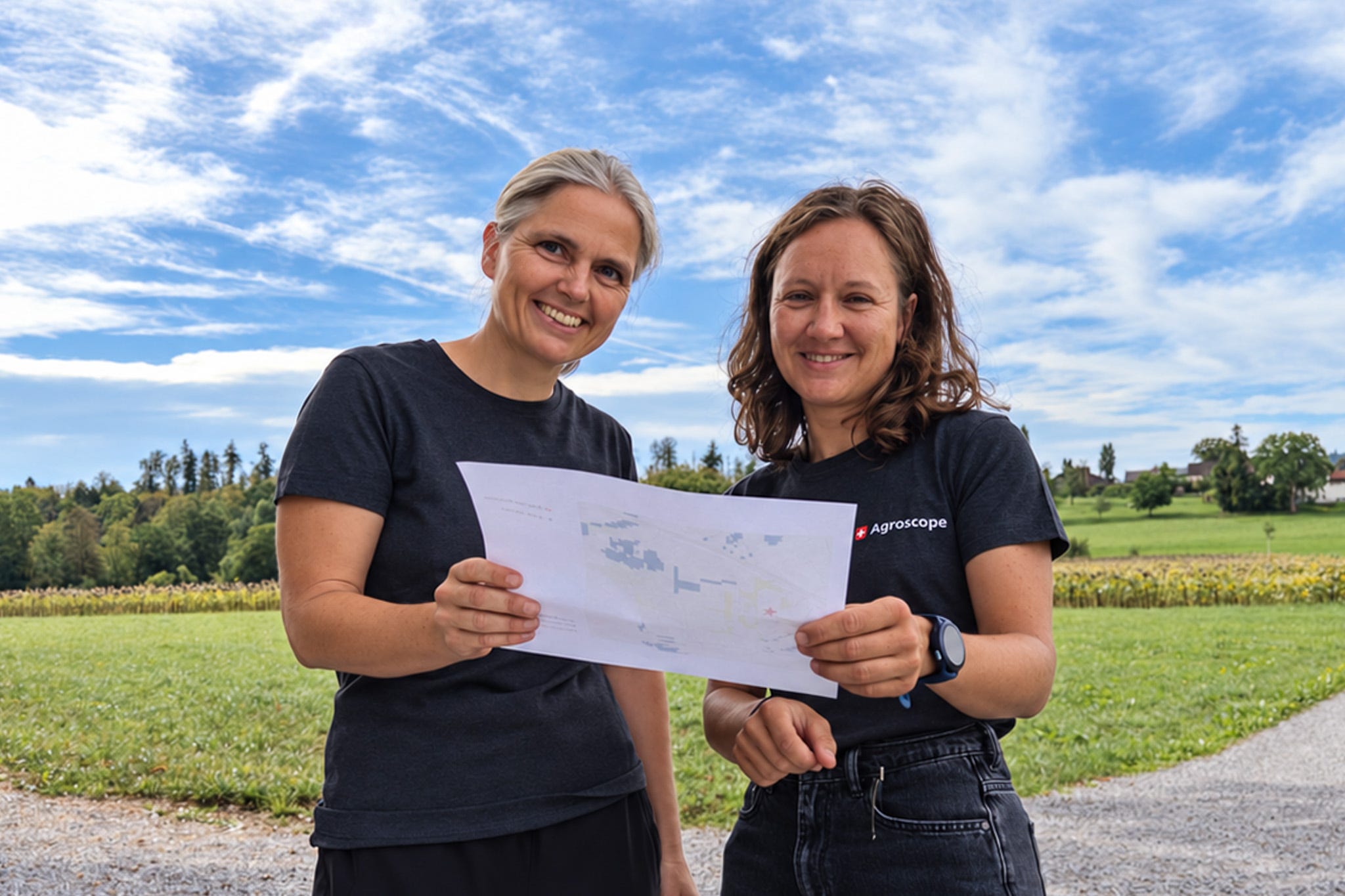
Forestry specialist and geographer Sonja Kay, left, and geographer Amelie Kreuzer, right, stand smiling on a farm track, jointly holding a printed map towards the camera. Both wear dark T-shirts; Kreuzer’s bears the Agroscope logo. Behind them, green meadows and a maize field stretch across a gently rolling landscape beneath a blue, cloudy sky.
Sonja Kay, left, and Amelie Kreuzer compare their study with conditions on the ground. Behind them, a field of sunflowers conceals the Katzenbach, a stream that bursts its banks after heavy rain and turns the field into a lake. Photo: Jürg Vollmer

“At first glance, this field looks perfectly ordinary. Only when you look more closely does the picture become more complicated,” says Amelie Kreuzer.

The geographer is standing with her colleague Sonja Kay on the outskirts of Zurich (Switzerland), in front of a field of sunflowers. The plants are grown as green fodder for cattle and will later be made into silage.

Behind the sunflowers flows the Katzenbach. Straightened and confined to a channel more than a century ago, the stream looks unremarkable. But after heavy rain, it swells and bursts its banks. Then the field can turn into a lake overnight. The sunflower, forage maize or winter wheat harvest can quite literally be washed away.

For Amelie Kreuzer, the conclusion is clear: “There is nothing wrong with the way this land is being farmed. But because the Katzenbach regularly bursts its banks, it would make more sense to use this arable land as grassland.”
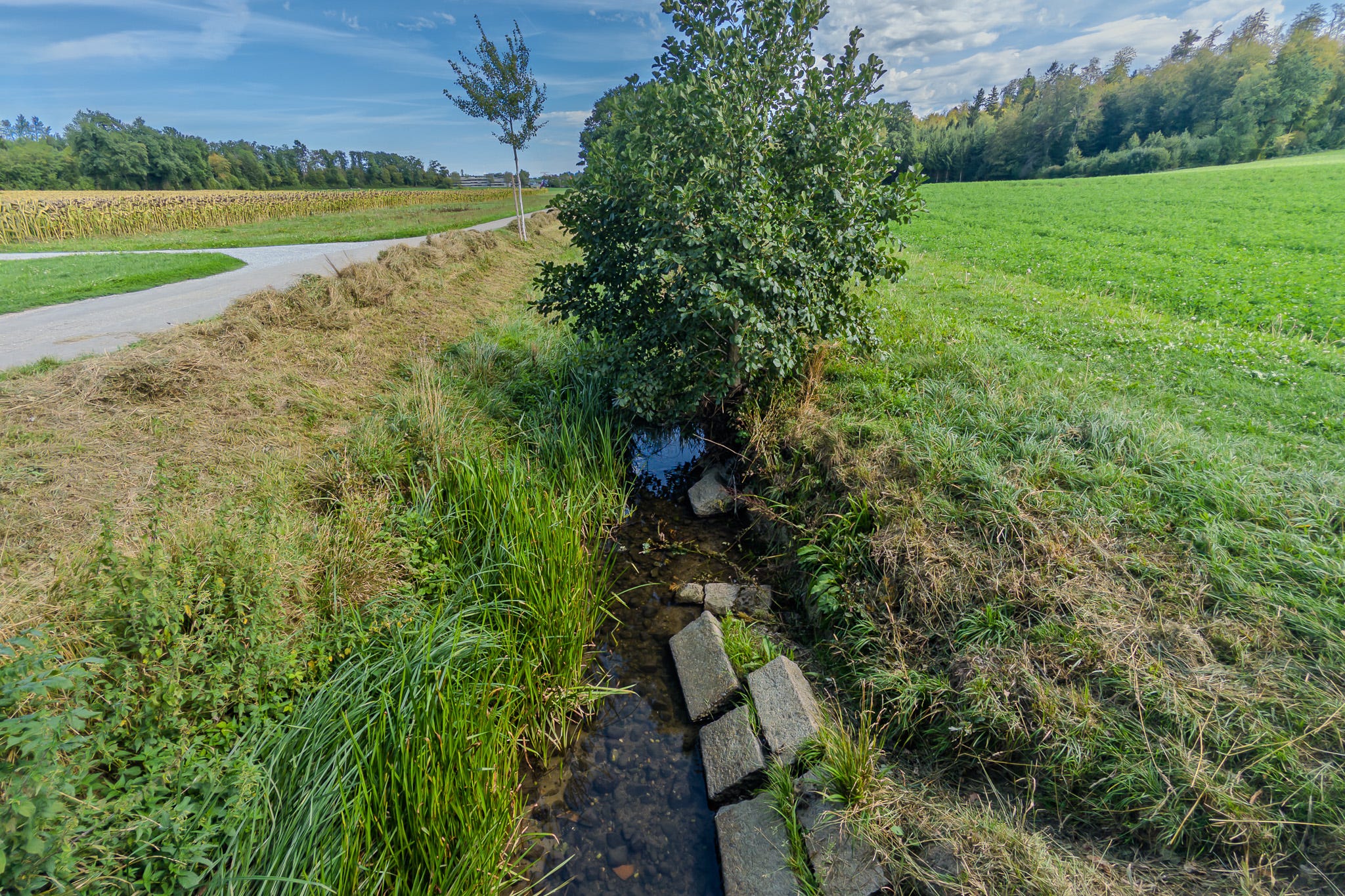
The channelled Katzenbach flows through a narrow, stone-lined bed between densely vegetated banks. After heavy rain, the stream can burst its banks and flood the adjoining sunflower field on the left. A green meadow stretches away to the right, while a paved farm track runs along the left.
The channelled Katzenbach flows through a narrow, stone-lined bed. After heavy rain, it bursts its banks and floods the adjoining field on the left. Photo: Jürg Vollmer

Are we using our land in the right way?

Amelie Kreuzer and Sonja Kay have examined which land uses are suited to which locations across Switzerland. The study was commissioned by the agricultural research centre Agroscope and the Federal Office for Agriculture (FOAG).

“Designing where to crop and where to graze: A spatial approach toward sustainable farming”

The study’s findings point in two directions:

In the strictest scenario, only 58 per cent of today’s arable land meets all the site criteria examined. The remaining 42 per cent would be better classified as grassland.

Conversely, 26 per cent of today’s grassland has the potential to be used for arable farming.

“This isn’t about ploughing up Switzerland,” says Amelie Kreuzer. “It’s about taking a closer look at where growing crops really makes sense.”

Kostenlos abonnieren, um weiterzulesen

Geben Sie Ihre E-Mail-Adresse ein und erhalten Sie jeden Post von Food Revolution
Haben Sie bereits ein Konto? Anmelden
© 2026 Jürg Vollmer · Datenschutz ∙ Bedingungen ∙ Hinweis zur Erfassung
Starte deinen SubstackApp herunterladen
Substack ist das Zuhause für Schreiben, Podcasting und Mediengründer.