


Short & sweet
A fermentation jar ain’t a parking spot for vegetables — it’s a small reactor of transformation.
Salt, an oxygen-poor environment, time, and temperature shift the balance inside the jar in favor of the right microbes.
Cloudy brine, tiny bubbles, and a soft pffft when you open the lid aren’t warning signs — they’re the footprints of a well-ordered biological process.
Fermentation doesn’t just preserve food — it reshapes the flavor, texture, and character of the vegetables.
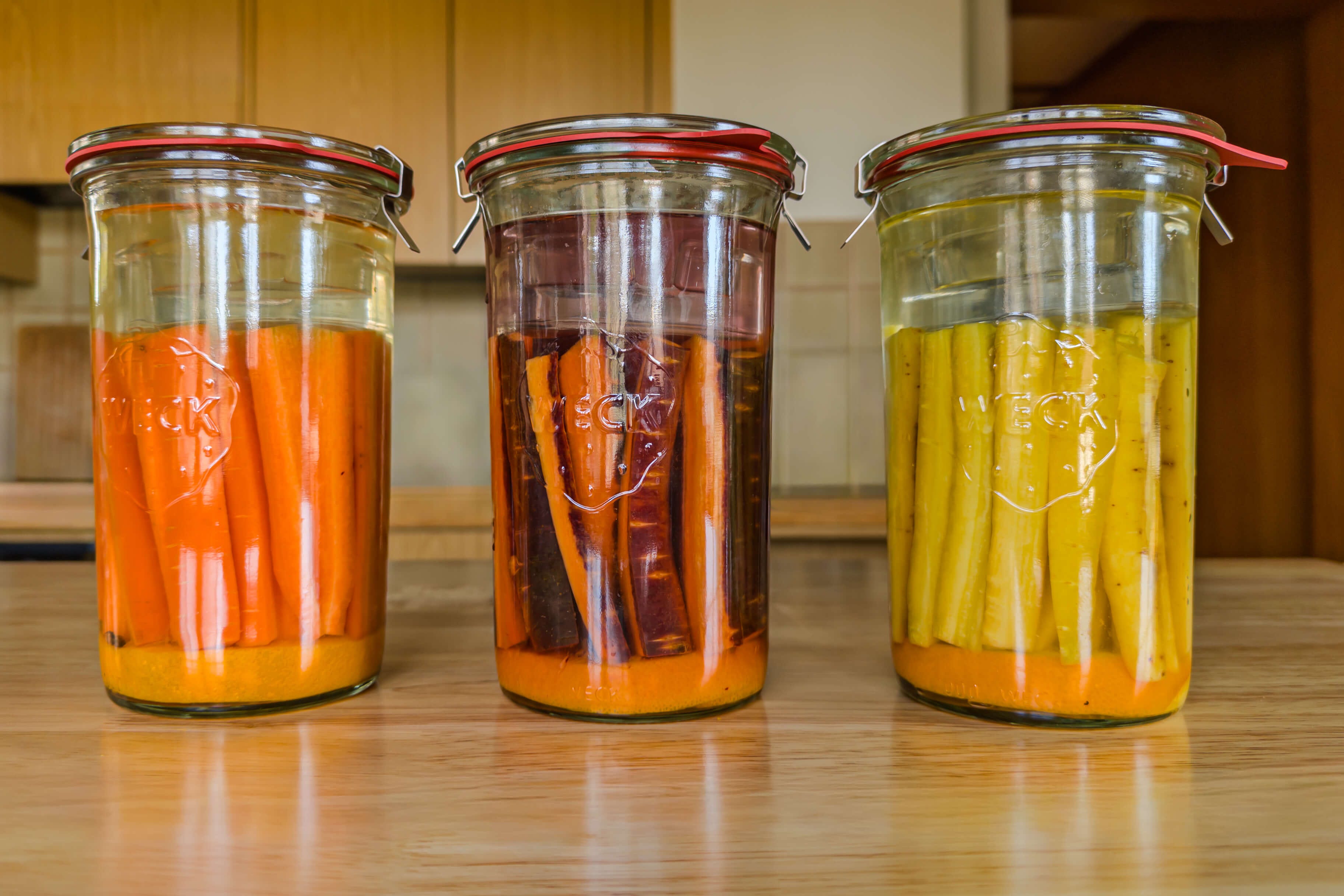
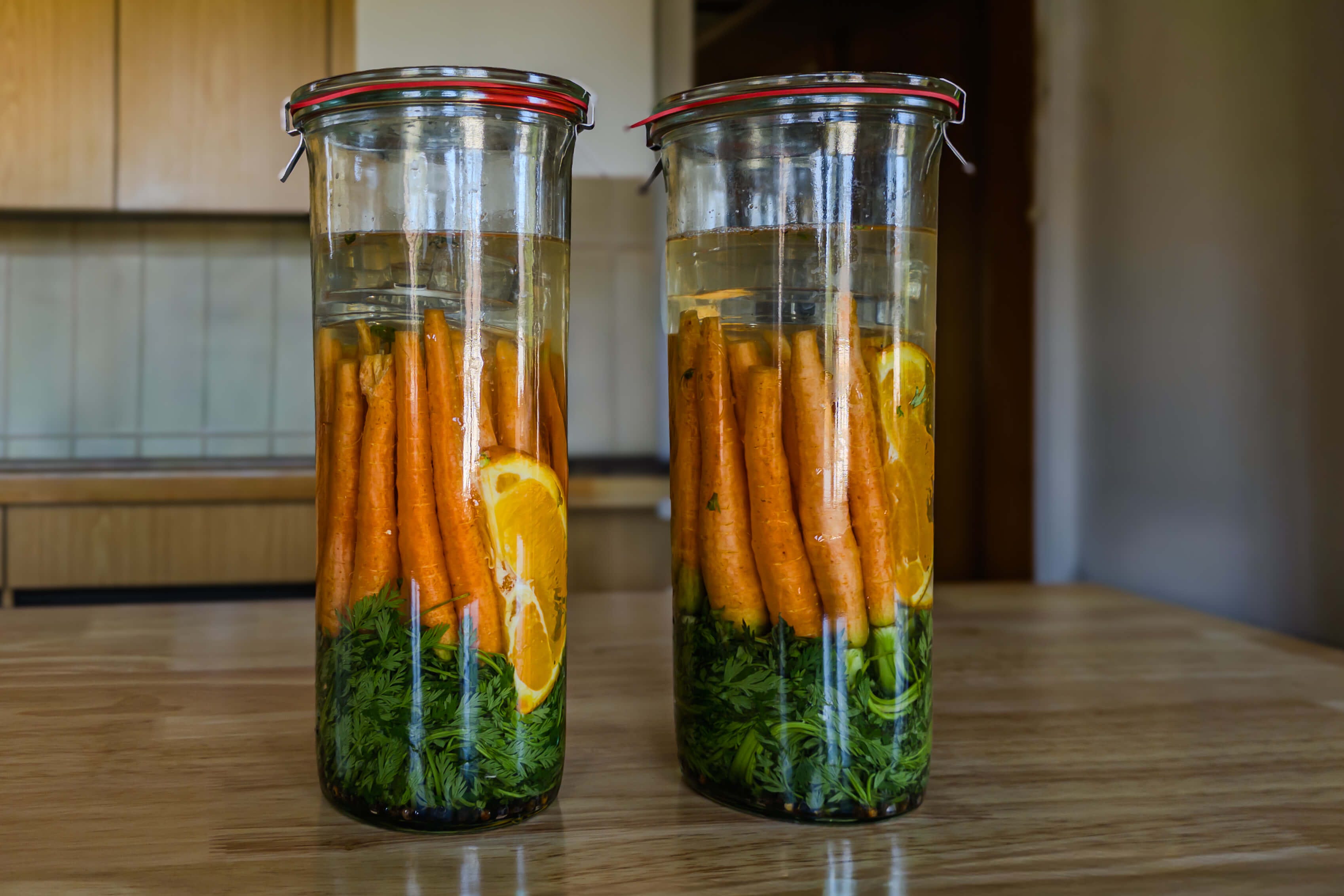
From my kitchen cupboard I pull out three one-liter jars of fermented carrot sticks. Three days ago they were just carrots sitting in salt brine: firm, a little sweet, bright orange.
Now the brine is slightly cloudy, and fine bubbles cling to the glass. When you open the lid it makes a clear sound: pffft.
And right about here the same reflex shows up for many people:
Is that still good — or already spoiled?
It’s an understandable question. We’ve learned to distrust food the moment it visibly changes. Cloudiness feels like a warning sign. Sourness feels like something turning bad. Pressure in a jar almost sounds like trouble waiting to happen.
With fermentation, it’s the exact opposite.
What looks like loss of control is actually a fairly precise biological process you can steer. No kitchen magic, no hippie microbe cult — just applied food science with a very long tradition.
Humans were already fermenting foods roughly 13,000 years ago, as I explain in my article on the history of fermentation:

Fermentation Creates the Right Environment for the Right Microbes
Fermentation simply means microorganisms transforming substances. In vegetables fermenting in a jar, those are mostly lactic acid bacteria that already live on the vegetables themselves as part of the natural microbial life on plant surfaces.
During vegetable fermentation, species like Lactobacillus, Leuconostoc, Pediococcus, and Weissella take turns doing the work — a process known as microbial succession.
When we ferment carrots, cabbage, or cucumbers, we’re not importing life into the jar. We’re creating conditions that allow the helpful microorganisms to outcompete the others.
How to receive only the English-language newsletter.
Here, I’ll show you — plain and simple.
The main control levers are simple:
Salt
Limited oxygen
Time
Temperature
That’s all it takes.
But pretending precision doesn’t matter would be wishful thinking.
Salt Is the Steering Wheel of Fermentation
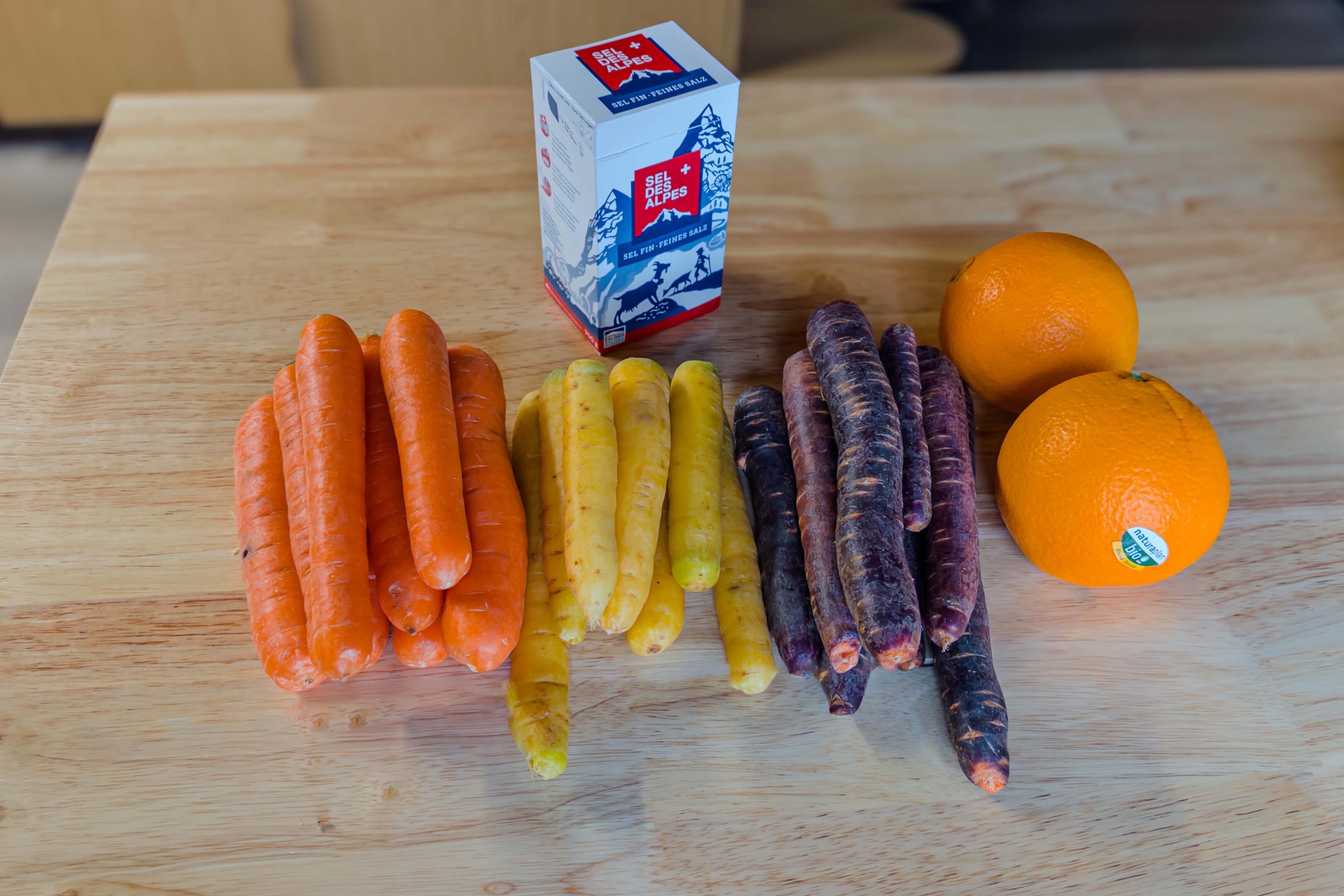
When we salt vegetables or cover them with brine, the salt isn’t seasoning — it’s a control tool. It draws water out of the vegetables, changes osmotic pressure, and slows down microorganisms we don’t want in the jar.
At the same time, salt-tolerant bacteria — including the lactic acid bacteria we’re aiming for — handle those conditions just fine.
More salt slows fermentation.
Less salt speeds it up.
With dry salting (like cabbage for sauerkraut), the salt pulls the vegetable’s own juice out of the cells.
With brine fermentation (like carrot sticks), we create the environment using salted water.
Typical ratios:
2–3% salt brine for vegetables in liquid
2% salt by vegetable weight for dry salting
In both cases the rule is the same:
The vegetables must stay fully submerged.
Not halfway. Not “mostly.” Not “it’ll probably be fine.”
Under the liquid.
That’s where oxygen is scarce — and that’s exactly what shifts the balance in the jar.
With Limited Air, the Jar Develops a Fermentation-Friendly Atmosphere
During lactic acid fermentation, carbon dioxide (CO₂) should escape the jar — but oxygen, fruit flies, and mold spores should stay outside.
A fermentation-friendly gas environment can only form if the jar is closed. Though “closed” is a bit of a flexible concept.
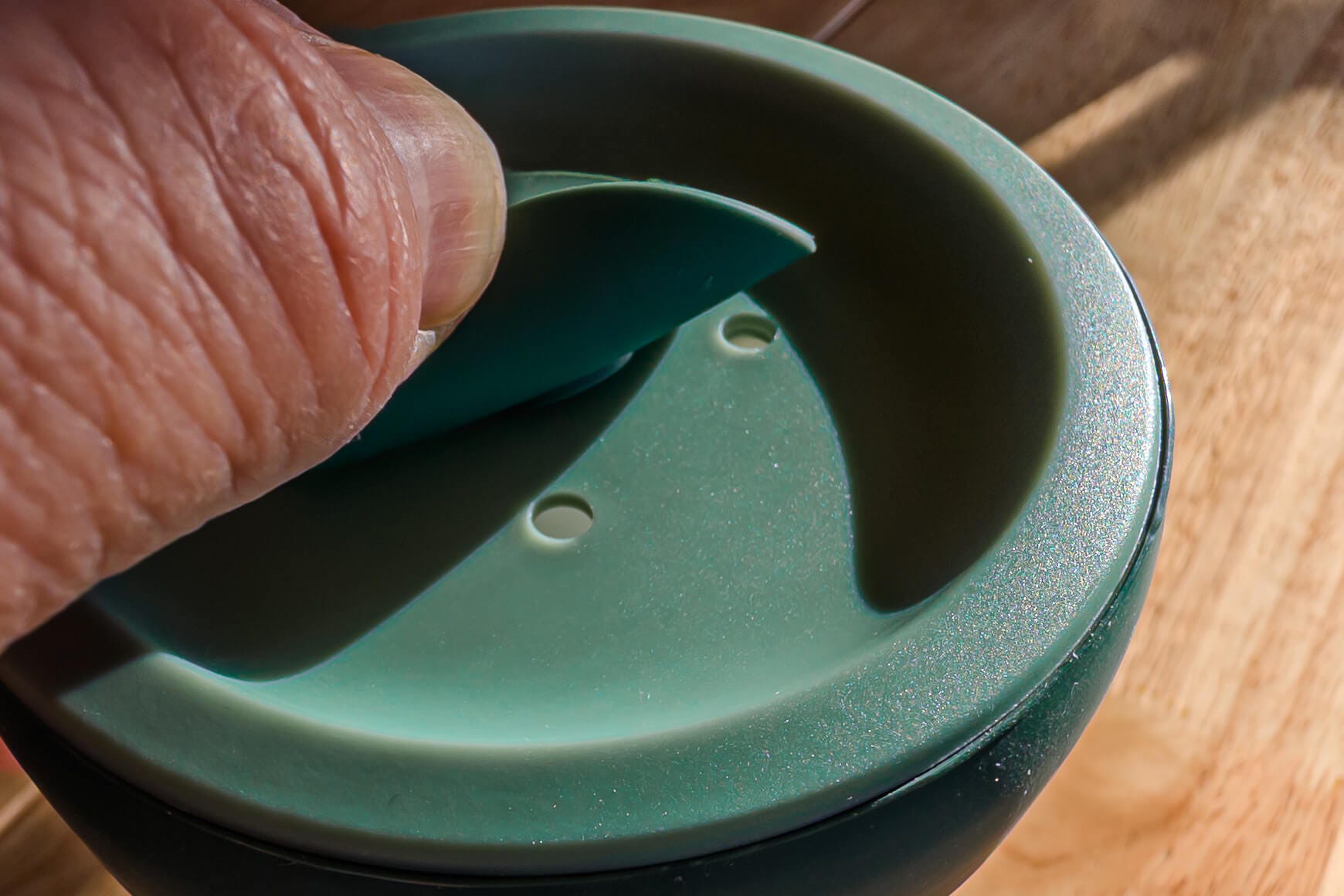
In North America, people often ferment in jars with loose screw lids. If they’re tightened, the pressure needs to be released regularly. Some lids come with silicone valves so excess gas can escape automatically.
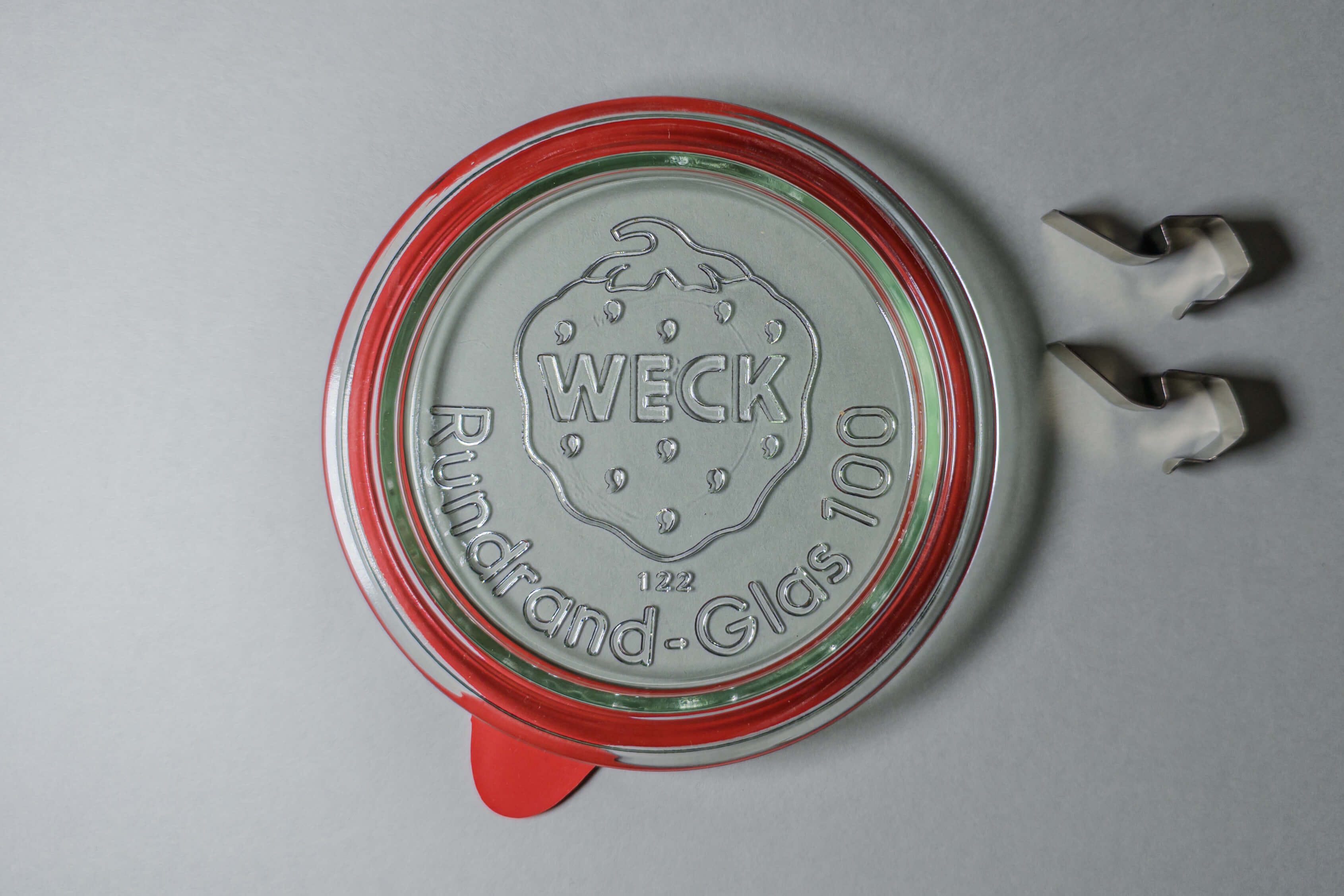
In Germany, Austria, and Switzerland, fermentation usually happens in WECK or REX jars with orange rubber seals. These seals allow small amounts of pressure to escape even when the jar is clamped shut.
So WECK and REX jars aren’t sealed perfectly airtight — but they stay closed.
During the first days, aerobic microbes use up the oxygen inside the jar. Only after that do the anaerobic lactic acid bacteria really get to work.
I tell the curious story behind the WECK and REX brands in another explainer:

Over Time, the Jar Stabilizes Itself
During the first hours after preparing the vegetables in brine, not much seems to happen. But inside the jar, a quiet reordering begins.
Salt changes the environment. Plant juices leak out. Microbial competition sorts itself out.
After a few days:
small bubbles rise
the brine turns cloudy
the smell changes
The vegetables no longer smell simply raw or earthy. They develop a mild, fresh acidity.
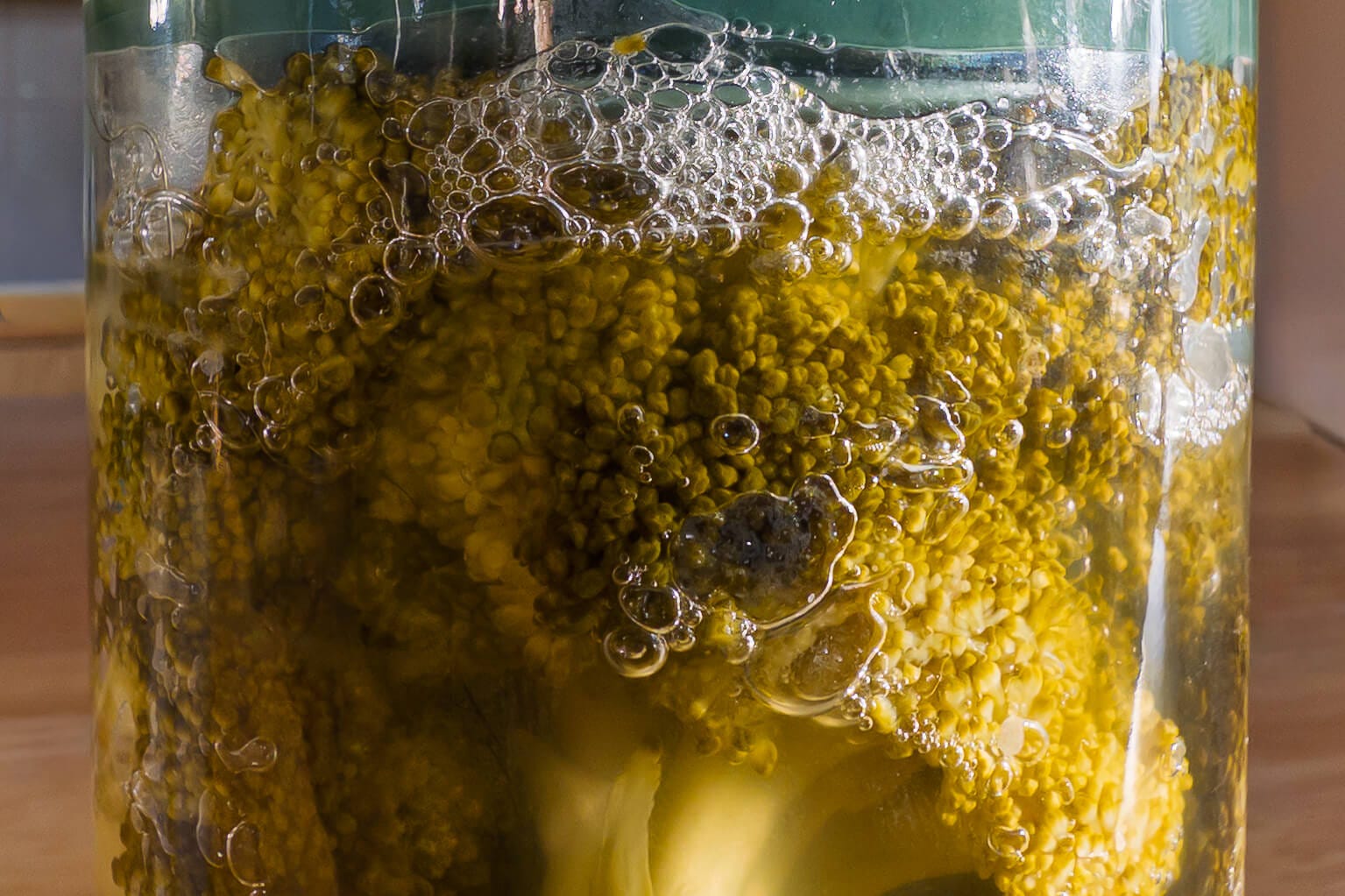
Time determines whether a ferment tastes young and crisp or deeper, rounder, and more sour.
Different vegetables behave differently:
cabbage ferments quickly and clearly
carrots ferment more gently
cucumbers can sometimes ferment almost explosively
Every vegetable brings its own chemistry.
What’s happening inside the jar:
Lactic acid bacteria metabolize natural plant sugars.
This produces lactic acid, carbon dioxide, and aromatic compounds.
The carbon dioxide appears as bubbles or slight pressure.
The lactic acid lowers the pH value.
That falling pH is crucial. It gradually makes the environment unfriendly for many harmful microbes. If the starting conditions were right, the jar stabilizes itself step by step.
Fresh vegetables typically begin around pH 5–6.5. During fermentation the value drops significantly.
Below pH 4.6, the environment is considered safely acidic.
Flavor-wise, many vegetables taste best between pH 3.5 and 4.2 — pleasantly sour without being aggressive.
Temperature Controls the Pace — and the Balance
Salt, oxygen limitation, and time never act alone. Temperature always joins the conversation.
The warmer the jar sits, the faster the lactic acid bacteria work.
Higher temperatures speed up acid formation, but they can also soften vegetables faster and increase the risk of unwanted developments.
Cooler temperatures slow fermentation — but often make it more stable and cleaner in flavor.
A jar of carrots that ferments calmly at 18 °C might ferment much faster at 24 °C — but also more erratically.
So better a little cooler and steady than warm and unpredictable.
My carrot jars aren’t sitting on a sunny windowsill, next to the stove, or by the radiator.
Fermentation doesn’t need heat.
It needs a stable environment.
And the dark kitchen cupboard provides exactly that.
Fermentation Doesn’t Preserve Vegetables — It Transforms Them
To sum it up: vegetables don’t become shelf-stable because nothing lives in the jar anymore.
They last longer because the right microorganisms took over and changed the environment.
That’s the crucial difference.
Shelf life here doesn’t come from sterility — it comes from microbial dominance under controlled conditions.
That’s also what makes fermentation so appealing. The vegetables aren’t preserved like a frozen memory.
They’re transformed.
Sweet raw cabbage becomes sauerkraut with bite and depth.
An ordinary carrot turns into something crunchy, salty, pleasantly sour, and more complex than before.
Well-fermented vegetables keep many months in the refrigerator, sometimes a year or longer if stored cool.
Fermentation Is Robust — But Not Foolproof
For beginners especially, it’s important to distinguish normal changes from real warning signs.
Cloudy brine is usually normal.
Small bubbles are normal.
A mild sour smell definitely is.
Even the fact that the vegetables no longer taste “fresh like before” but sharper and tangier is not a problem — that’s the whole point.
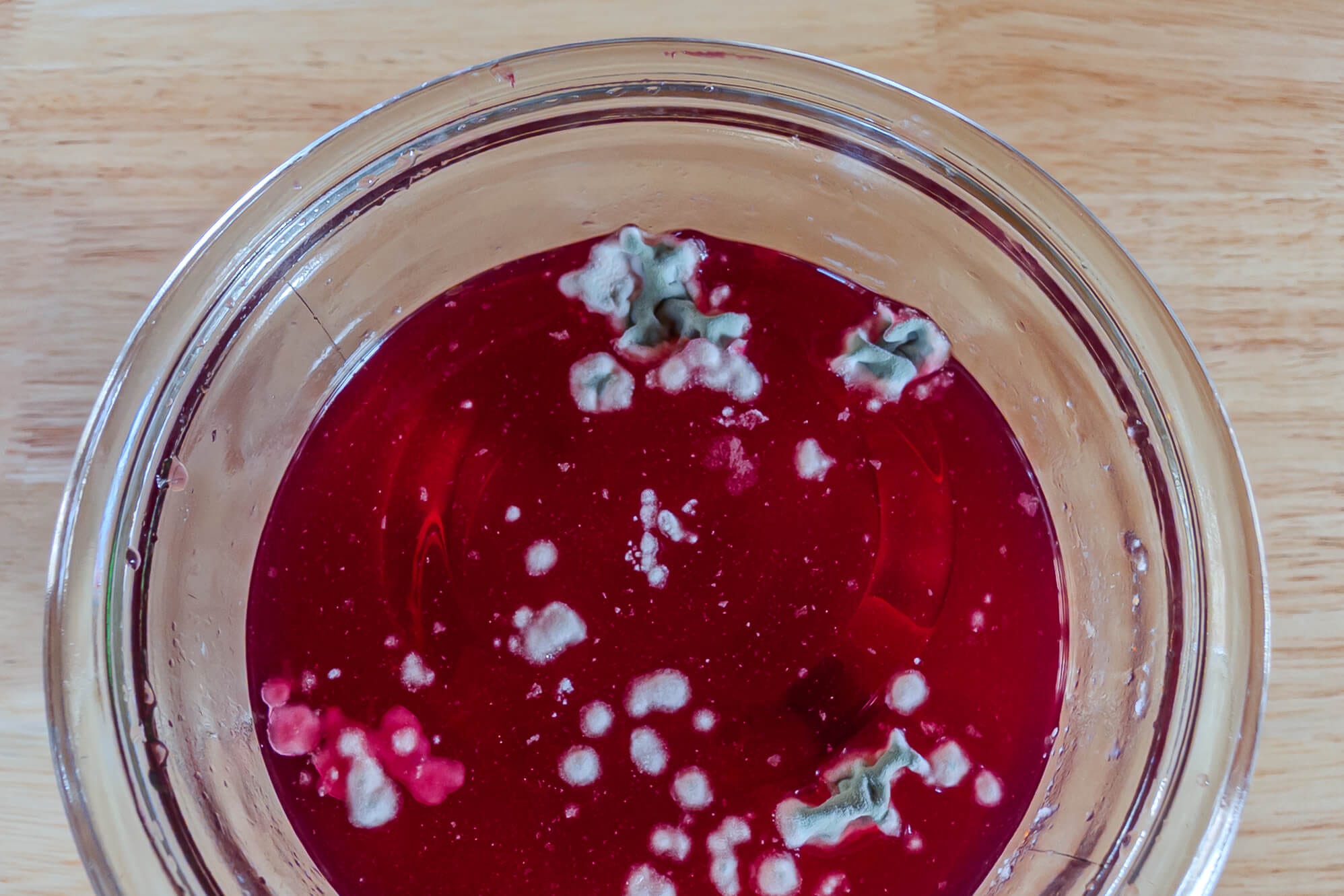
Problems start when the smell turns rotten, disgusting, or moldy, when fuzzy or colorful mold appears on the surface, or when the entire jar clearly smells like spoilage instead of fermentation.
Eating vegetables despite such warning signs means confusing romantic enthusiasm with poor risk assessment.
The smarter alternative to a hospital visit is simple:
Throw out the contents and clean the jar thoroughly.
My one-liter jars of carrot sticks in the kitchen cupboard aren’t containers for slowly rotting vegetables.
They’re small reactors of transformation.
Salt sets the order.
Low oxygen selects the microbes.
Bacteria go to work.
Acid protects the result.
Once we understand that, we look at the jar differently — not with suspicion, but with respect for an old technique that turns a few carrots and some salt into far more than a side dish:
a food with new structure, new flavor, and its own small story inside the jar.
All clear? Y’all agree, or you see it a little different?
Drop your thoughts down below in the comments.
How to receive only the English-language newsletter.
Here, I’ll show you — plain and simple.
Full overview of the entire fermentation series: all articles on one page
