


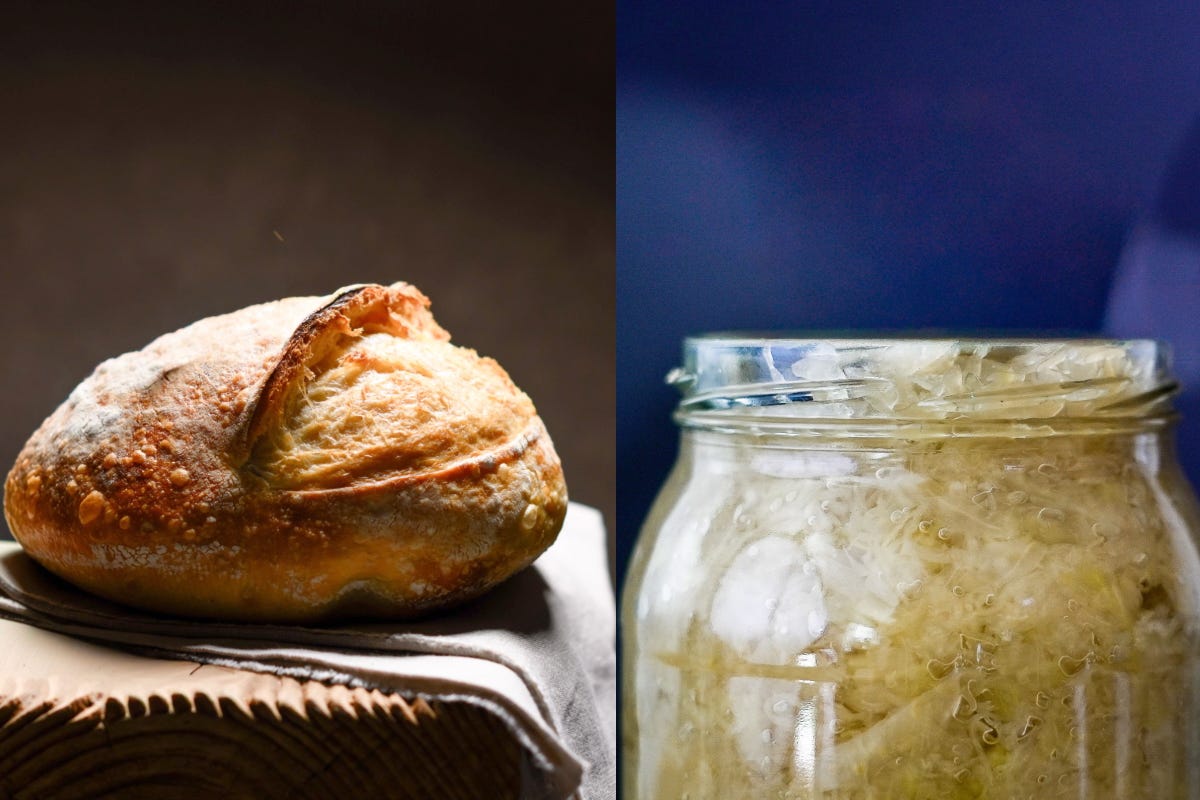
On February 1, 2026, the first-ever World Ferment Day will take place. Fermentation is being rediscovered because it’s a simple, low-tech way to get more flavor and longer shelf life out of just a few ingredients — and, along the way, a solid way to save surplus instead of throwin’ it away.
I’m startin’ a fermentation series, where I break the core ideas down in plain terms, offer practical entry points, and answer the questions that actually matter.
This page is updated on a regular basis (last update: January 28, 2026).
Short & straight
What is fermentation?
Start here (for beginners)
The fermentation series at a glance
Background
Fermentation practice: basic gear, base recipes, troubleshooting
Safety: hygiene rules, warning signs, when to toss it, temperature & salt as control knobs
Book tips
Video links
Glossary
FAQ
Fermentation is controlled microbe work. Using salt, time, and temperature, bacteria and yeasts turn food more flavorful, longer-keepin’, and often richer in texture. Today, fermentation is makin’ a comeback as a practical counter-move to convenience food, uniform flavors, and food waste.
Here you’ll find all Food Revolution pieces on fermentation gathered in one place: background stories and reportages, step-by-step how-tos, book and video tips, plus an explain-it-clear glossary and FAQ.
How to use this page
If you’re new to fermentation, start with Start here (for beginners) — that’s where the essentials live.
If you want to jump right in, head to Practice & Guides for recipes and troubleshooting.
If you want the deeper why, read Background and Safety to understand how fermentation works — and where its limits are.
💡 First understand → then start → then go deeper.
How to receive only the English-language newsletter.
Here, I’ll show you — plain and simple.
What is fermentation?
Principle: Fermentation is controlled microbe work. Bacteria and yeasts convert sugars and other nutrients into acids, alcohol, and gases — changin’ food and stabilizin’ it.
What you get: Simple raw ingredients gain depth: new aromas, different textures, often better digestibility — and a kitchen that leans less on factory-made food.
Control knobs: You steer the process with three main levers: salt slows and selects microbes, time gives ’em room to work, and temperature sets speed and direction (too warm = fast and risky, too cold = slow and steady).
Flavor: Fermentation is flavor engineering without additives: acidity, umami, gentle sweetness, bread-crust notes, fizzy freshness — dependin’ on ingredient and microbial culture.
Shelf life & food waste: Acidity and friendly competition hold spoilage organisms in check. Food keeps longer, and surplus (cabbage, carrots, leftover bread) stays outta the trash.
Start here (for beginners)
When hard-workin’ microbes get busy in a jar: fermentation makes its way back into the kitchen
WECK, REX, and Buelach — Every European Country’s Got Its Own Way to Ferment
Required reading [link coming]
Required reading [link coming]
Required reading [link coming]
The fermentation series at a glance
Here you’ll find all posts in the fermentation series, neatly organized: background stories and reportages, step-by-step guides, book and video recommendations, plus a clear glossary and FAQ.
Background (updated regularly)
When hard-workin’ microbes get busy in a jar: fermentation returns to the kitchen
Format: Backgrounder
What you’ll get out of it: You’ll learn how long folks have been fermenting, how fermentation works as a controllable low-tech process (salt, oxygen control, time, temperature), how to recognize successful ferments by sight, smell, and taste, which safety rules truly matter — and why all of this ties together flavor, shelf life, and less food waste.
Date: January 27, 2026
Preserving Food in Jars: Fermenting, Pickling, and Canning
Format: Backgrounder / Practical Guide
What you’ll get out of it: You’ll finally understand — clear as glass — the difference between fermenting, pickling, and canning (method vs. effect). You’ll learn the four core levers — acidity, water activity, heat, and oxygen — as a simple thinking model. And at the end, you’ll get a practical decision guide for which method works best for which vegetables, fruits, and sauces — including safety pitfalls like oil preservation and the risk of botulism.
Date: February 13, 2026
Fermenting Made Simple: How Vegetables Gain New Structure and Flavor
Format: Backgrounder / Practical Guide
What you’ll get out of it: You’ll come to see fermentation as something you can steer, not some kind of kitchen voodoo: which microbes you actually want runnin’ the show in that jar, how you guide the whole setup with salt, low air, time, and temperature — and how to read the usual signs (cloudy brine, little bubbles, that soft pffft) without mistakin’ ’em for spoilage.
Date: March 13, 2026
Practice (updated regularly)
Basic gear
WECK, REX, and Buelach — Every European Country’s Got Its Own Way to Ferment
Format: Backgrounder / Field Test
What you’ll get out of it: You’ll learn what really matters in European canning and fermenting jars — the round rim (RR) as the sealing surface, RR size standards, accessory compatibility, and what makes a jar actually easy to clean instead of a lifelong regret.
You’ll get clear criteria for what makes a jar “ferment-ready.” And along the way, you’ll pick up the short cultural backstory of why Germans “weck,” Austrians “rex,” and why the Swiss mostly encounter their green Buelach jars in museums these days — unless Grandma’s still got one hiding in the pantry..
Date: February 27, 2026
[more links coming soon]
Base recipes
Lacto-fermented vegetables in a jar, sourdough starter, kombucha, ginger beer [links coming]
Troubleshooting
Kahm yeast, mold, too salty, too soft, too sour, fermentation pressure [links coming]
Safety (updated regularly)
Hygiene rules
[links coming]
Warning signs
[links coming]
When to toss it
[links coming]
Temperature & salt as control knobs
[links coming]
⚠️ Disclaimer
The information in this section is provided for general educational purposes only and does not replace medical, nutritional, or individual advice from qualified professionals. Fermented foods may be tolerated differently depending on the person, health situation, ingredients, and production conditions.
If you’re unsure whether a ferment is still safe (for example: unusual smell or taste, visible mold, strong discoloration, sliminess, or unexpected gas buildup), discard it and don’t taste it. When in doubt: throw it out instead of riskin’ it.
Book tip (updated regularly)
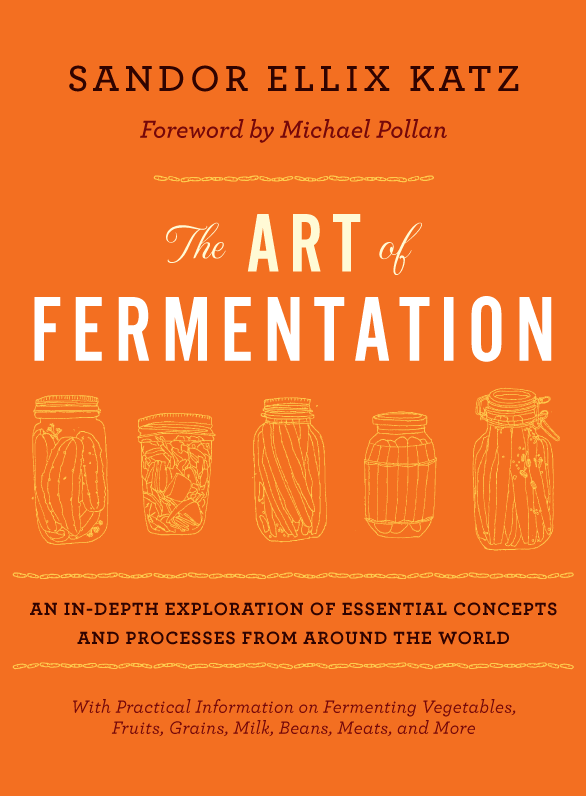
«The Art of Fermentation» by Sandor Ellix Katz
Chelsea Green Publishing, 2012
ISBN 978-1-60358-286-5
Written by one of the founding figures of the modern fermentation movement, Katz’s book is widely regarded as the bible of fermentation. It’s a big, generous read that walks through just about every fermentation method out there, along with plenty of background — all in a warm, approachable, and thoughtful way. Highly recommended.
Video tip (updated regularly)
[coming]
Glossary (updated regularly)
Aerobic: With oxygen. Usually unwanted in fermentation, since oxygen encourages mold and off-ferments. Example: open jar.
Alcoholic fermentation: Yeasts convert sugar into alcohol and carbon dioxide. Foundation for beer, wine, and airy doughs. Example: cider.
Starter: A small portion of an active culture (such as sourdough or kombucha) used to kick off a new fermentation. Provides microbes and speeds things up. Example: sourdough discard.
Backslopping: Inoculatin’ a new batch with a bit of the previous one (common with sourdough or yogurt). Stabilizes the microbiome and saves time. Example: yogurt seeding.
Brine: Saltwater used as the fermentation medium, mainly for vegetables. Salt suppresses unwanted organisms and favors lactic acid bacteria. Example: 2% brine.
CO₂ (carbon dioxide): Gas produced during many fermentations. Pushes out oxygen and creates bubbles, pressure, and lift. Example: bubbles in a jar.
Ferment: The product or active culture under microbial transformation — the term often refers to both process and result. Example: kimchi.
Airlock: A valve that lets CO₂ escape without lettin’ oxygen in. Makes fermentation more controlled, especially for drinks. Example: swing-top bottle.
Yeast: Single-cell fungi that ferment sugars into alcohol and CO₂. They leaven dough and shape aroma. Example: baker’s yeast.
Yeast water: Water populated by wild yeasts (often from fruit) used as a leavening agent. Less sour than sourdough and aromatically flexible. Example: raisin water.
Kahm yeast: Thin whitish film on the surface. Usually harmless but can affect flavor. Often caused by excess oxygen. Example: white film.
Kefir: Fermented milk or water drink made with a mixed culture of bacteria and yeasts. Lightly fizzy. Example: milk kefir.
Kombucha: Fermented tea made with a SCOBY. Known for acidity, light carbonation, and complex aromas. Example: black-tea kombucha.
Lacto-fermentation: Fermentation driven by lactic acid bacteria converting sugars into lactic acid. Preserves food and adds bright acidity. Example: sauerkraut.
Lactic acid bacteria: Group of bacteria that convert sugars into lactic acid, lowering pH and crowding out spoilage organisms. Example: Lactobacillus.
pH: Measure of acidity. A falling pH is a key signal for stable, safe lacto-ferments. Example: pH 3.8.
SCOBY: “Symbiotic Culture Of Bacteria and Yeast,” a living culture matrix that drives kombucha fermentation. Example: kombucha ‘mother’.
Starter culture: A defined microbial blend added on purpose (such as yogurt cultures). Produces more predictable results than wild fermentation. Example: yogurt culture.
Sourdough: A dough culture of lactic acid bacteria and yeasts that ferments flour, producing acidity, aroma, and lift. Example: rye sourdough.
Wild fermentation: Fermentation without purchased starter cultures, relying on microbes from ingredients, air, and environment. Often complex, less standardized. Example: pickles in a jar.
FAQ (updated regularly)
Do I need a starter? [coming]
Why salt? [coming]
What should I do if mold appears? [coming]
How warm or how cold should it be? [coming]
How to receive only the English-language newsletter.
Here, I’ll show you — plain and simple.